
Healthy Food Guide by KarbCoach
Trader Joe's Tomato Sauce: Food Integrity analysis
Quick answer
High integrity
Trader Joe's tomato sauce received a Food Integrity Score of 90 out of 100 (high integrity). This reflects minimal processing and low additive load. This tomato sauce keeps it simple with mainly organic ingredients. The use of citric acid is typical for maintaining a stable pH, but doesn't detract from the overall integrity. It's a wholesome choice for those looking to enjoy a minimally processed sauce with clean ingredients. Look for variations without added acidity regulators.
Food Integrity Score 90/100
What stood out on the label?
- Minimal processing
- Low additive load
- Transparency: High
Simpler options to consider
- Look for variations without added acidity regulators
You are viewing ingredients and processing. Switch to Longevity for nutrition and longer-term eating pattern fit.
Source data, GTIN, and Healthy Food Guide analysis details
Product facts
- Product
- Trader Joe's Tomato Sauce
- Brand
- Trader Joe's
- Category
- Prepared Meals (source: Plant Based Foods And Beverages)
- GTIN / UPC
00000000390453- Serving size
- 63 g (0.25 cup (63 g))
- Source data — ingredients
- Ingredient list from product label data (see Sources)
- Healthy Food Guide analysis
- Independent Longevity and Food Integrity scorecards. See methodology under Sources.
- Data last verified
Food Integrity results
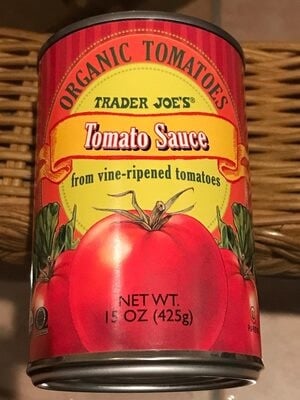
Tomato Sauce
Trader Joe's
High integrity
Warning Signs
Sea salt and citric acid are generally safe here but are worth noting.
Consider This
Citric acid can indicate mild processing, but it's a common acidity regulator.
Good Substitutes
Consider basic homemade tomato sauce with fresh tomatoes, herbs, and spices.
Overall Assessment
High integrityThis tomato sauce keeps it simple with mainly organic ingredients. The use of citric acid is typical for maintaining a stable pH, but doesn't detract from the overall integrity. It's a wholesome choice for those looking to enjoy a minimally processed sauce with clean ingredients.
Key Highlights
Better choice tips
- Look for variations without added acidity regulators.
Ingredients
Ingredient list
ORGANIC TOMATO PUREE (WATER, ORGANIC TOMATO PASTE), SEA SALT, ORGANIC CAYENNE PEPPER, CITRIC ACID (ACIDITY REGULATOR)
Formulations can vary — check the package label for the final word.
Highest-concern ingredients first. Expand an item for notes.
CITRIC ACID (ACIDITY REGULATOR)Concern 2/10 — Very low concernAcidity regulator
What this is
Acidity regulator
Processing category
Processed
Main concern area
Processing
Why it matters
Helps maintain stable product pH.
Additional note
Commonly used acidity regulator.
ORGANIC TOMATO PUREE (WATER, ORGANIC TOMATO PASTE)Concern 1/10 — Very low concernSimple food
What this is
Simple food
Processing category
Natural refined
Why it matters
Reflects straightforward tomato preparation.
Additional note
Basic tomato preparation.
SEA SALTConcern 1/10 — Very low concernSimple food
What this is
Simple food
Processing category
Whole food
Why it matters
Usual seasoning choice with no issues.
Additional note
Common mineral seasoning.
ORGANIC CAYENNE PEPPERConcern 0/10 — No meaningful concernSimple food
What this is
Simple food
Processing category
Whole food
Why it matters
Adds natural spiciness to foods.
Additional note
Natural heat source.
This score estimates how close a food appears to a simple, recognizable, high-integrity ingredient profile versus a refined, additive-heavy, vague, artificial, or industrially formulated food. It is not a medical safety rating. Formulations can vary by region, size, and packaging. Check the package label for ingredients, allergens, and nutrition. Not medical advice — do not use this site or the KarbCoach mobile app for allergy or health decisions.
How this product may fit different goals
The same food can look different depending on what matters most to you. Here is a general preview of how this product may align with several common goals.
Vegetarian
SupportiveDietary Patterns
For someone prioritizing Vegetarian, the available data suggest this product may align in helpful ways.
A supportive signal: Plant-food ingredients (Mentions "tomato". See ingredients for details.)
Vegan
SupportiveDietary Patterns
For someone prioritizing Vegan, the available data suggest this product may align in helpful ways.
A supportive signal: Plant-food ingredients (Mentions "tomato". See ingredients for details.)
Plant-Based
SupportiveDietary Patterns
For someone prioritizing Plant-Based, the available data suggest this product may align in helpful ways.
A supportive signal: Plant-food ingredients (Mentions "tomato". See ingredients for details.)
Minimally Processed Eating
SupportiveDietary Patterns
For someone prioritizing Minimally Processed Eating, the available data suggest this product may align in helpful ways.
A supportive signal: Processing level (Minimal processing)
This product has 2 additional signals for this goal.
Whole-Food Focused Eating
SupportiveDietary Patterns
For someone prioritizing Whole-Food Focused Eating, the available data suggest this product may align in helpful ways.
A supportive signal: Processing level (Minimal processing)
This product has 2 additional signals for this goal.
Reduce Ultra-Processed Foods
SupportiveDietary Patterns
For someone prioritizing Reduce Ultra-Processed Foods, the available data suggest this product may align in helpful ways.
A supportive signal: Processing level (Minimal processing)
This product has 2 additional signals for this goal.
Low-Spike Stability
NeutralMetabolic Health
For someone prioritizing Low-Spike Stability, the Food Integrity data do not show a strong matching signal for this product.
Heart-Healthy Eating
NeutralMetabolic Health
For someone prioritizing Heart-Healthy Eating, the Food Integrity data do not show a strong matching signal for this product.
GLP-1 Eating Support
NeutralMetabolic Health
For someone prioritizing GLP-1 Eating Support, the Food Integrity data do not show a strong matching signal for this product.
Low Sugar Lifestyle
NeutralMetabolic Health
For someone prioritizing Low Sugar Lifestyle, the Food Integrity data do not show a strong matching signal for this product.
Appetite & Portion Awareness
NeutralMetabolic Health
For someone prioritizing Appetite & Portion Awareness, the Food Integrity data do not show a strong matching signal for this product.
Athletic Fueling
NeutralAthletic Performance
For someone prioritizing Athletic Fueling, the Food Integrity data do not show a strong matching signal for this product.
Workout Recovery
NeutralAthletic Performance
For someone prioritizing Workout Recovery, the Food Integrity data do not show a strong matching signal for this product.
Strength & Protein Focus
NeutralAthletic Performance
For someone prioritizing Strength & Protein Focus, the Food Integrity data do not show a strong matching signal for this product.
Pescatarian
NeutralDietary Patterns
For someone prioritizing Pescatarian, the Food Integrity data do not show a strong matching signal for this product.
Low-Carb Lifestyle
NeutralDietary Patterns
For someone prioritizing Low-Carb Lifestyle, the Food Integrity data do not show a strong matching signal for this product.
Keto-Style Eating
NeutralDietary Patterns
For someone prioritizing Keto-Style Eating, the Food Integrity data do not show a strong matching signal for this product.
Low Gluten Eating
NeutralDietary Patterns
For someone prioritizing Low Gluten Eating, the Food Integrity data do not show a strong matching signal for this product.
Mediterranean-Style Eating
NeutralDietary Patterns
For someone prioritizing Mediterranean-Style Eating, the Food Integrity data do not show a strong matching signal for this product.
Paleo-Style Eating
NeutralDietary Patterns
For someone prioritizing Paleo-Style Eating, the Food Integrity data do not show a strong matching signal for this product.
Healthy Fat Focus
NeutralDietary Patterns
For someone prioritizing Healthy Fat Focus, the Food Integrity data do not show a strong matching signal for this product.
See how this product fits your goals
Choose what matters most to you and explore a more detailed interpretation of this product's nutrition, ingredients, and tradeoffs.
Understanding the Food Integrity analysis
What the Food Integrity analysis evaluates
The Food Integrity analysis focuses on how a packaged food is formulated and made. It examines processing level, ingredient quality, additives, oils, sweeteners, purity cues, and how clearly a label communicates what is in the product. The Food Integrity Score summarizes that formulation and transparency picture on a 0–100 scale. It is not a full nutrient report and it is not a personalized meal plan.
Why processing, ingredients, and transparency matter
Processing level and ingredient quality shape what you are actually eating beyond calories on the label. Additives, industrial oils, and intense sweeteners can change how clean or heavily engineered a product feels, even when the front of pack looks wholesome. Purity and transparency matter because incomplete or marketing-heavy labeling can hide tradeoffs that only show up when the full ingredient list is reviewed carefully.
Who may prioritize Food Integrity
Some people care mainly about Food Integrity because their dietary goals center on formulation rather than macros alone. Examples include checking vegetarian or vegan suitability, preferring simpler ingredient sources, avoiding certain additives or sweeteners, watching oil choices, or preferring less processed options. For those priorities, the Food Integrity Score can be the more practical first read.
How Food Integrity differs from Longevity
Food Integrity is the focused analysis of processing, ingredients, additives, purity, and transparency. Longevity is the broader analysis of nutritional composition, metabolic and dietary characteristics, processing, and ingredient quality together. Favorable nutrition values do not necessarily mean strong Food Integrity: a product can look balanced on macros yet still rely on heavy processing or additives that the Food Integrity analysis flags in more detail.
Why the two analyses overlap—and why to review Longevity too
The analyses overlap intentionally. Food Integrity–related characteristics contribute to Longevity, and Longevity still benefits from the same ingredient-quality lens. They are not competing verdicts; they answer different questions at different depths. Reviewing the Longevity analysis can add information about nutritional composition, metabolic characteristics, and dietary balance that Food Integrity alone does not emphasize. Looking at both usually gives the most complete understanding of tradeoffs.
Common questions about this product
Is Trader Joe's Tomato Sauce highly processed?
Food Integrity lists processing level as Minimal processing. That reflects formulation and processing signals from the ingredient analysis — not a medical or regulatory classification.
Why are the Longevity and Food Integrity scores different?
Longevity emphasizes nutrition per serving and longer-term dietary alignment. Food Integrity emphasizes ingredients, additives, processing, and label transparency. The same product can score differently on those lenses.
How much fiber is in one serving?
Trader Joe's Tomato Sauce shows about 1g of fiber per labeled serving in the Longevity nutrition facts.
Does it contain added sugar?
Trader Joe's Tomato Sauce: 2g total sugar per serving. Confirm the current package Nutrition Facts and ingredient list.
What helped the Longevity Score?
Key positives called out in the analysis include: Organic tomatoes; Low calorie content; Minimal processing.
What prevented a perfect Longevity Score?
Key concerns noted include: Sodium is present.
Who might evaluate this product differently?
People prioritizing different goals (for example lower carbs, higher protein, or minimally processed eating) may weigh the same prepared meals differently. Use the goal preview on this page, then personalize in KarbCoach for your priorities.
Source data and Healthy Food Guide analysis
- Public label databases (including USDA FoodData Central and Open Food Facts) — Possible sources for package ingredients and nutrition.
- Healthy Food Guide analysis (Longevity and Food Integrity) — Independent Longevity and Food Integrity scorecards.
- How the Longevity Score is calculated
- How the Food Integrity Score is calculated
- Scoring models: KarbCoach Longevity and Food Integrity.
- Independent analysis. No manufacturer affiliation.
- Formulations can vary by region, size, and packaging. Check the package label for ingredients, allergens, and nutrition. Not medical advice — do not use this site or the KarbCoach mobile app for allergy or health decisions. Full sources and safety details.
Label accuracy and safety information
Formulations can vary by region, size, and packaging. Check the package label for ingredients, allergens, and nutrition. Not medical advice — do not use this site or the KarbCoach mobile app for allergy or health decisions.
See how this item lines up with your goals
Healthy Food Guide covers this product in detail. In KarbCoach, your goals shape what matters most for your meals.
Also available in the app